

Salesforce Health Cloud: ER Diagrams with AbstraLinx
September 04, 2024
In today’s rapidly evolving healthcare environment, the need for robust and integrated patient management solutions has never been more critical. Salesforce Health Cloud is at the forefront of this transformation, offering a comprehensive platform designed to enhance the quality of care, improve patient outcomes, and streamline operations across the healthcare continuum.
What is Salesforce Health Cloud?
Salesforce Health Cloud is a patient and member relationship platform that builds on the core strengths of Salesforce CRM, optimized specifically for healthcare organizations. It provides a 360-degree view of patients, enabling healthcare providers to deliver personalized care at scale. By integrating data from various sources such as electronic health records (EHRs), medical devices, and wearables, Health Cloud empowers care teams with real-time insights, allowing for better coordination and more informed decision-making.(learn more )
Key Features of Salesforce Health Cloud

• Integrated Care Management: Facilitates collaboration among care teams, allowing them to work together more effectively in managing patient care.
• Advanced Therapy Management: Supports the management of complex therapies, including tracking patient progress and adjusting treatment plans as necessary.
• Care Program Management: Enables the design and execution of personalized care programs tailored to individual patient needs.
• Medication Management: Ensures that patients adhere to prescribed medications by providing reminders and tracking compliance.
• Pharmacy Benefit Verification: Streamlines the process of verifying insurance coverage for medications, reducing delays in treatment.
• Provider Relationship Management: Enhances communication and collaboration between healthcare providers and their patients.
• Utilization Management: Helps manage healthcare costs by ensuring that the necessary and appropriate care is provided.
• Home Health: Supports the delivery of healthcare services in a patient’s home, offering tools for remote monitoring and telehealth.
• Provider Network Contract Management: Simplifies the management of contracts between healthcare providers and insurance networks.
In this blog, we will dive deeper into these components through detailed diagrams created using AbstraLinx. Each diagram will give you a visual understanding of how these features are implemented within Salesforce Health Cloud, showcasing the platform’s ability to transform healthcare delivery.
Salesforce Health Cloud Data Models
To truly appreciate the depth and versatility of Salesforce Health Cloud, it’s essential to visualize its key components and how they interconnect to create a seamless healthcare experience. With this in mind, we’ve created a series of detailed diagrams using AbstraLinx, each one highlighting a specific feature or process within Health Cloud.
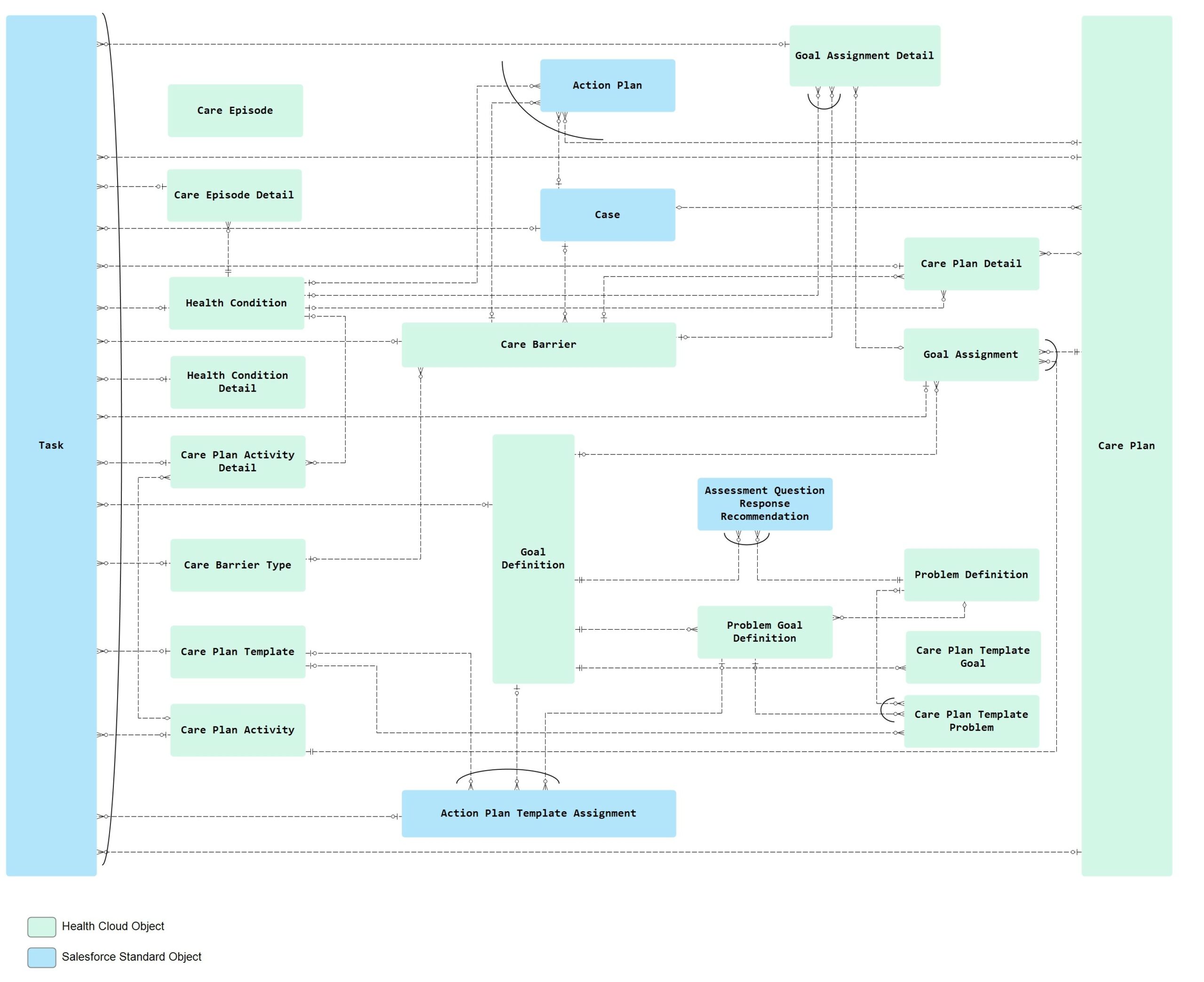 Integrated Care Management enhances the coordination of patient care by providing a comprehensive data model aligned with USCDI and FHIR R4 standards. It allows healthcare organizations to create and manage detailed care plans, track patient goals, health conditions, and address care barriers, ensuring a holistic approach to patient care.
Diagram Scope Objects and relationships involved in efficiently orchestrating care, including entities representing cases, goals, health conditions, activities, care plans, and care barriers (representing social determinants of health).
Entities (objects) Included Action Plan, Action Plan Template, Assignment, Assessment Question Response, Recommendation, Care Barrier Type, Care Episode, Care Episode Detail, Care Plan, Care Plan Activity, Care Plan Activity Detail, Care Plan Detail, Care Plan Template, Care Plan Template Goal, Care Plan Template Problem, Case, Case Barrier, Goal Assignment, Goal Assignment Detail, Goal Definition, Health Condition, Health Condition Detail, Person Account, Problem Definition, Problem Goal Definition, Task.
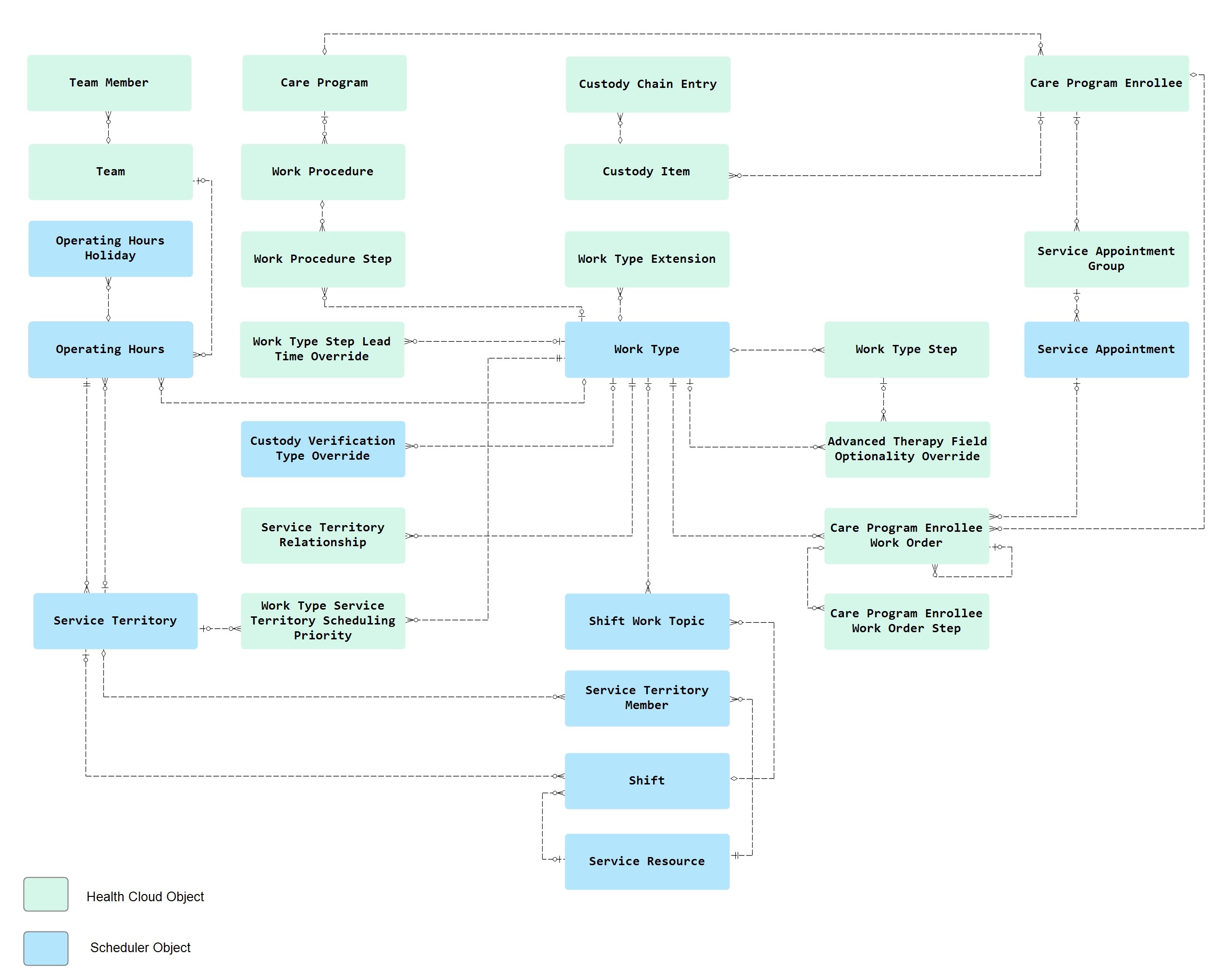 Advanced Therapy Management streamlines the management of complex therapies by integrating scheduling across multiple locations. Utilizing Salesforce Scheduler, this model ensures efficient coordination of therapy steps, from scheduling to execution, making it easier to manage advanced therapies like cell and gene therapy.
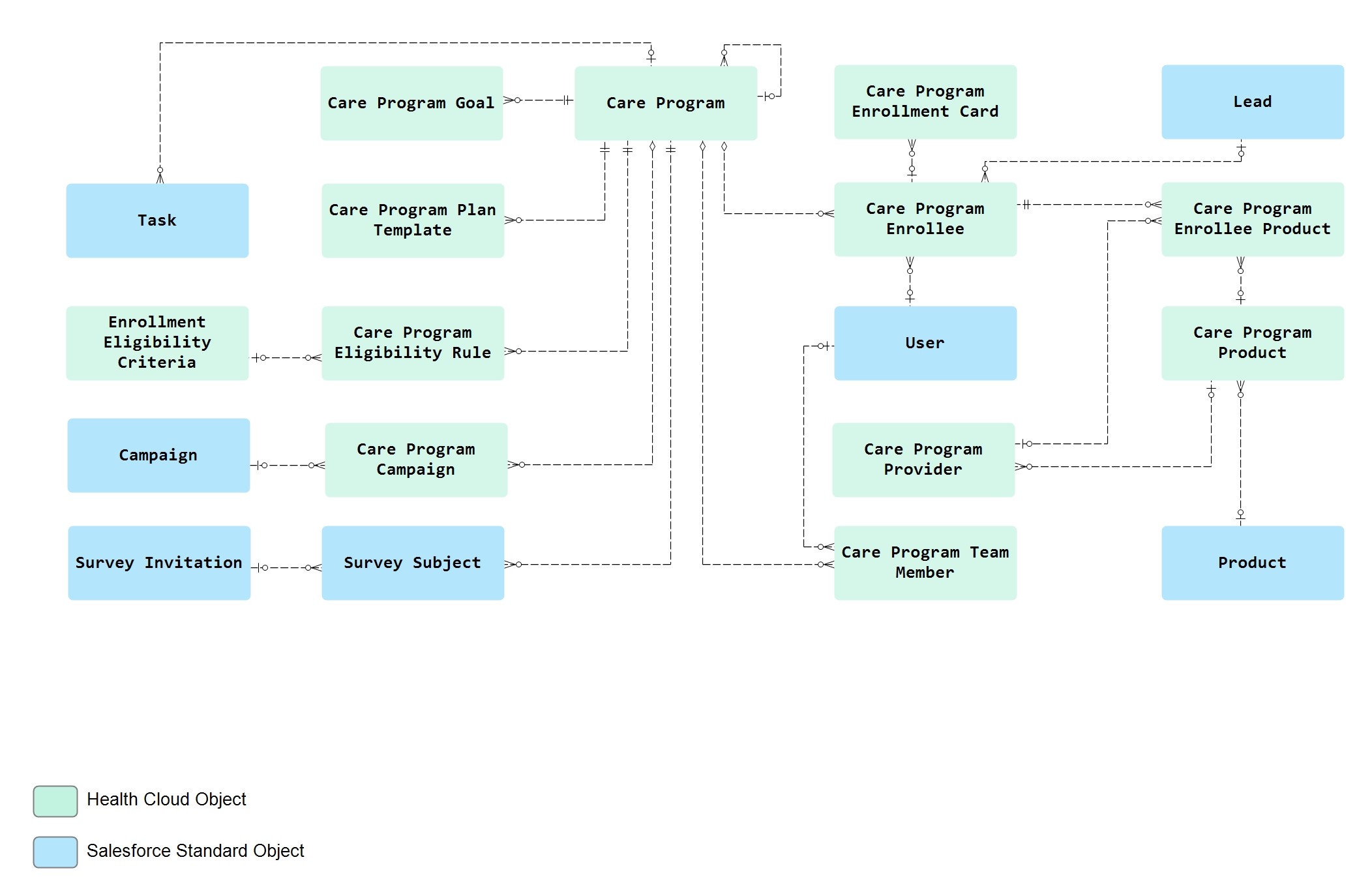 Care Program Management empowers healthcare organizations to create and manage personalized care programs, improving patient adherence and outcomes. This model supports the full lifecycle of a care program, from defining goals and eligibility to managing enrollees and team members.
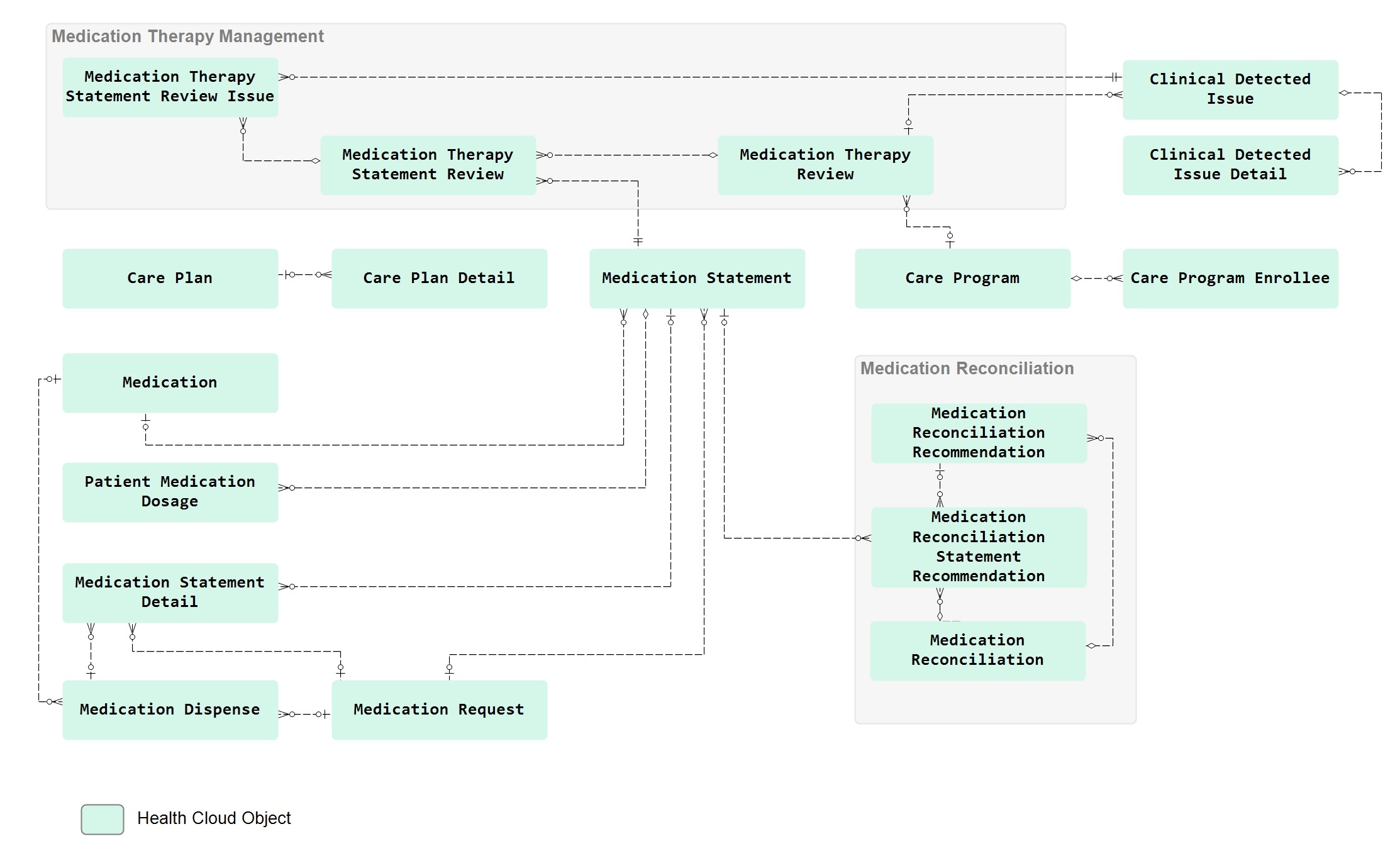 Medication Management ensures that patient medication regimens are accurately tracked and managed. This model supports providers in performing medication reconciliations, reviews, and therapy management, ultimately enhancing patient safety and treatment effectiveness.
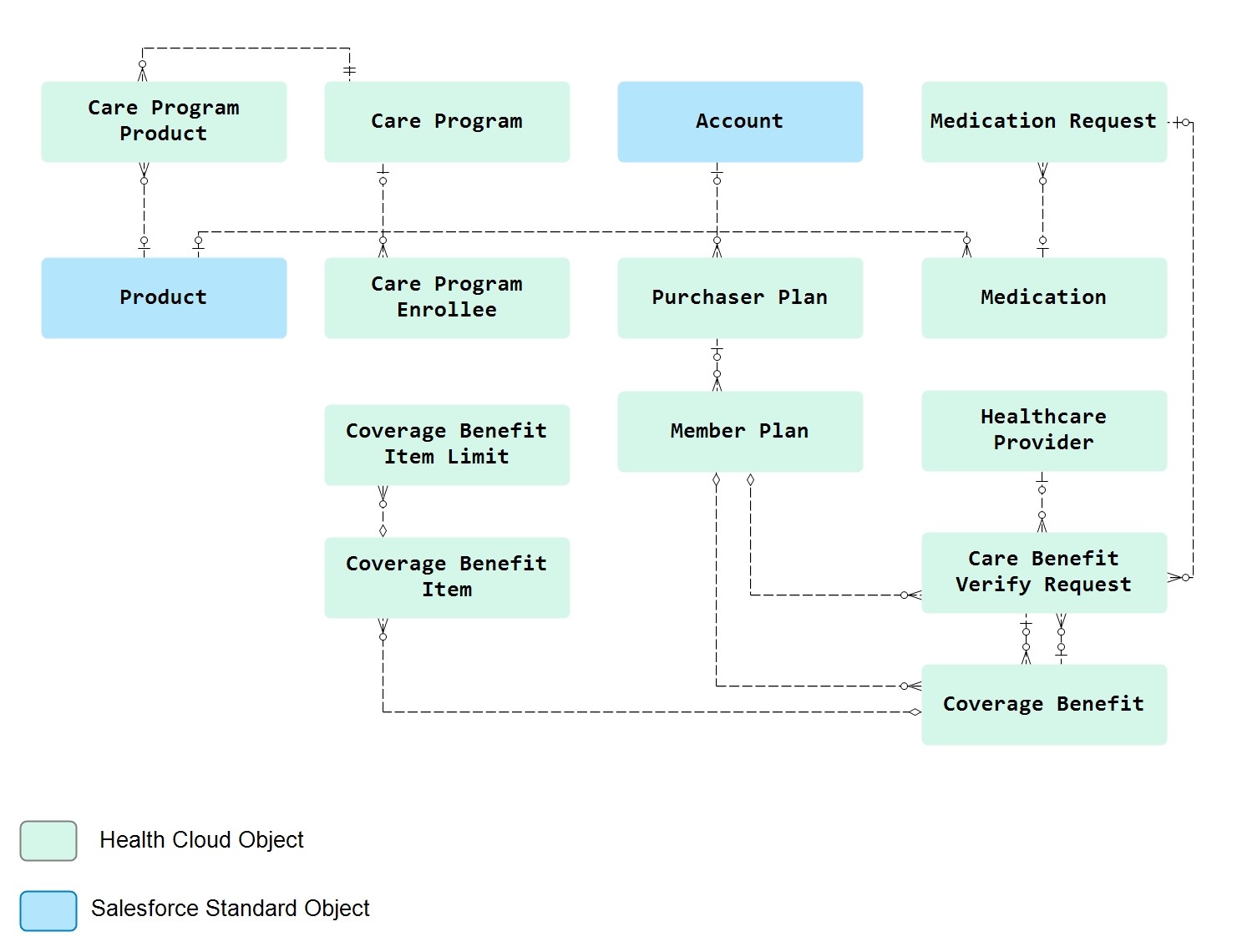 Pharmacy Benefit Verification simplifies the process of determining coverage for prescribed medications, ensuring that patients receive the right medication without delay. This model aligns with FHIR-CARIN and NCPDP standards, providing a robust framework for verifying pharmacy benefits.
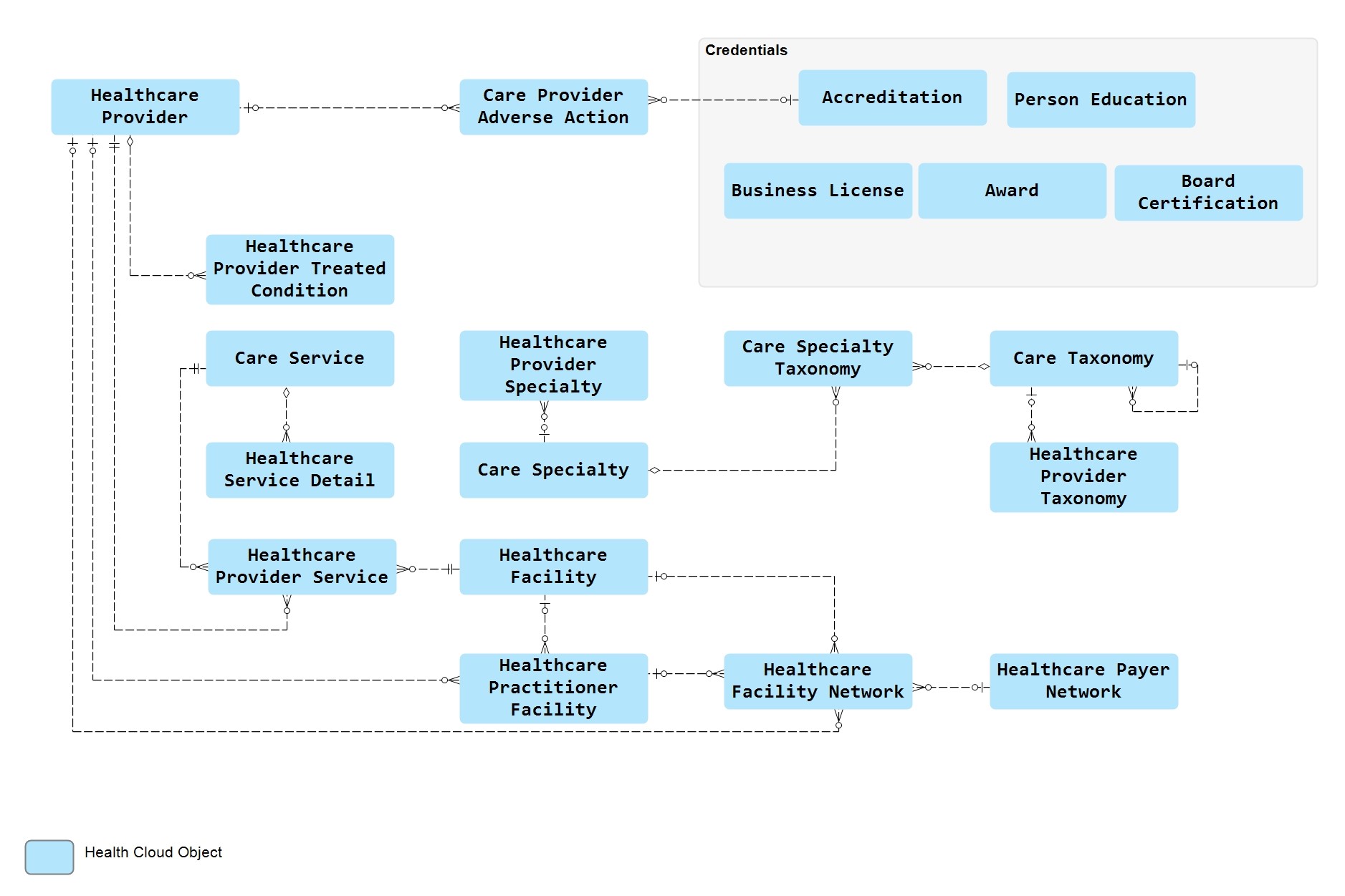 Provider Relationship Management allows healthcare organizations to manage their network of providers effectively. This model supports the management of provider affiliations, specialties, and facilities, ensuring that healthcare services are delivered by qualified and appropriately credentialed professionals.
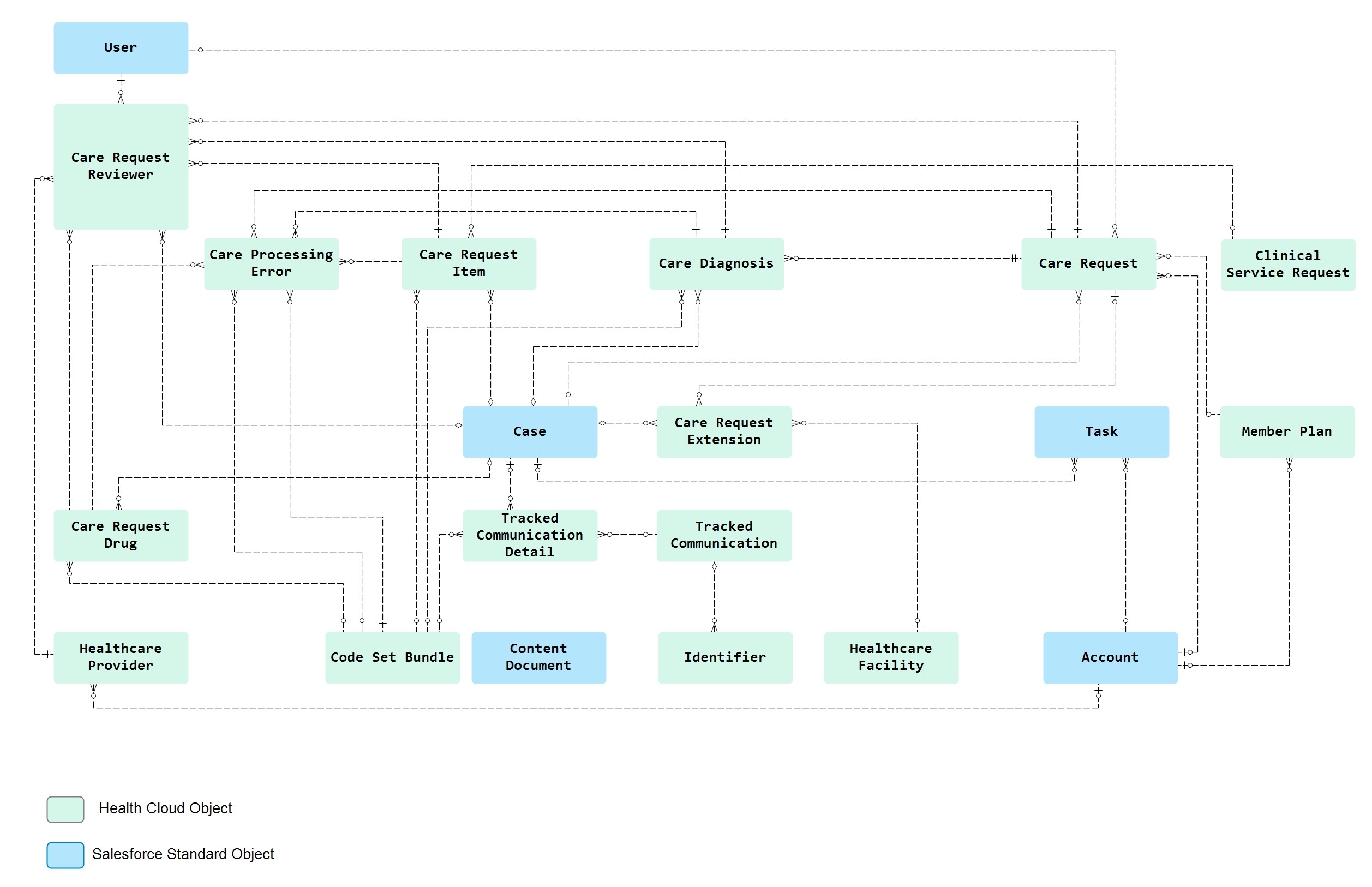 Utilization Management helps healthcare insurers ensure that patients receive the right care at the right time and in the right setting. This model facilitates the evaluation of medical services and communication about clinical policies, supporting effective and cost-efficient care delivery.
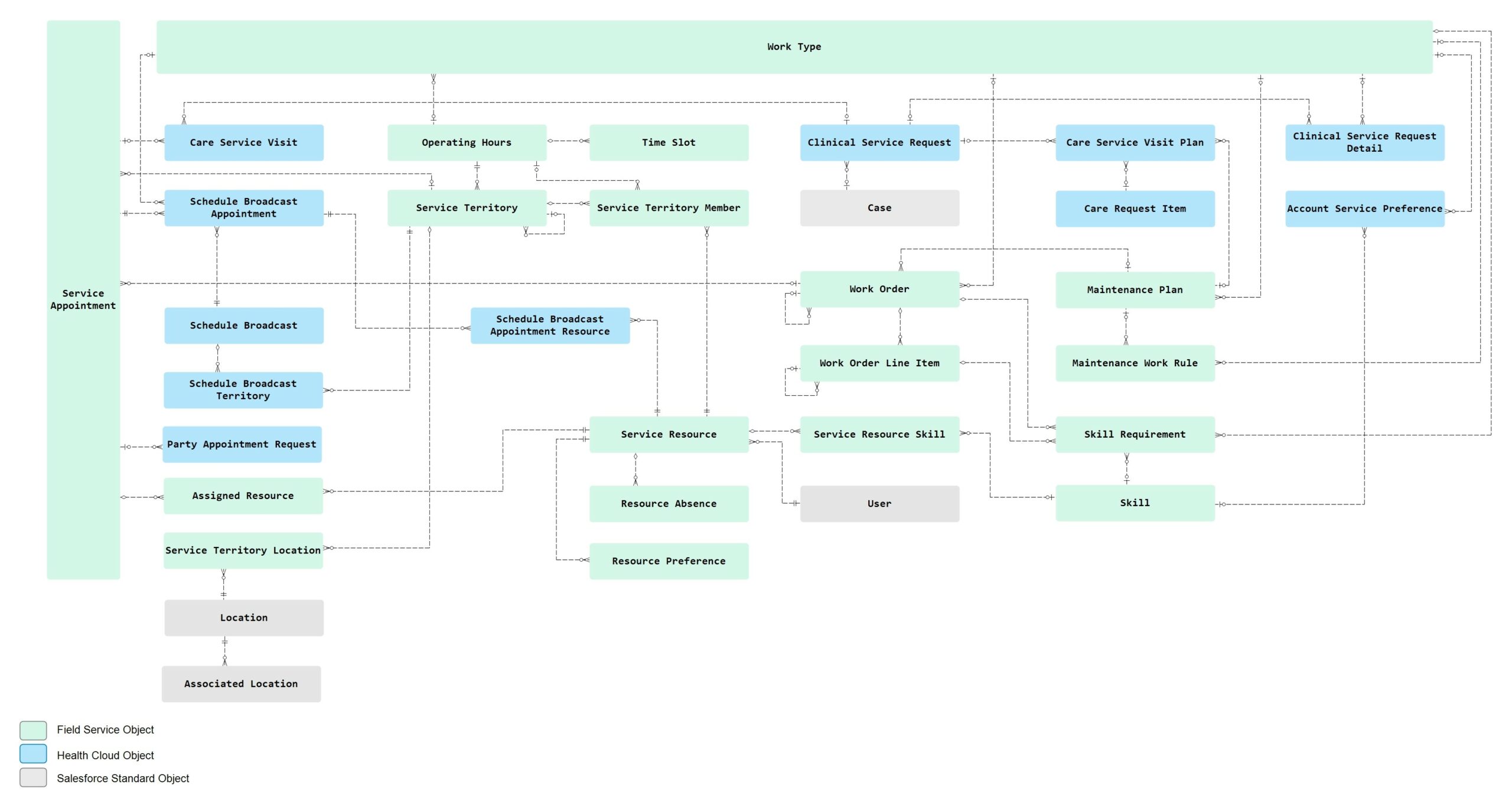 The Home Health model supports the delivery of healthcare services in a patient’s home. It includes tools for managing patient preferences, resource allocation, and the details of each home visit, ensuring that home healthcare services are delivered effectively and efficiently.
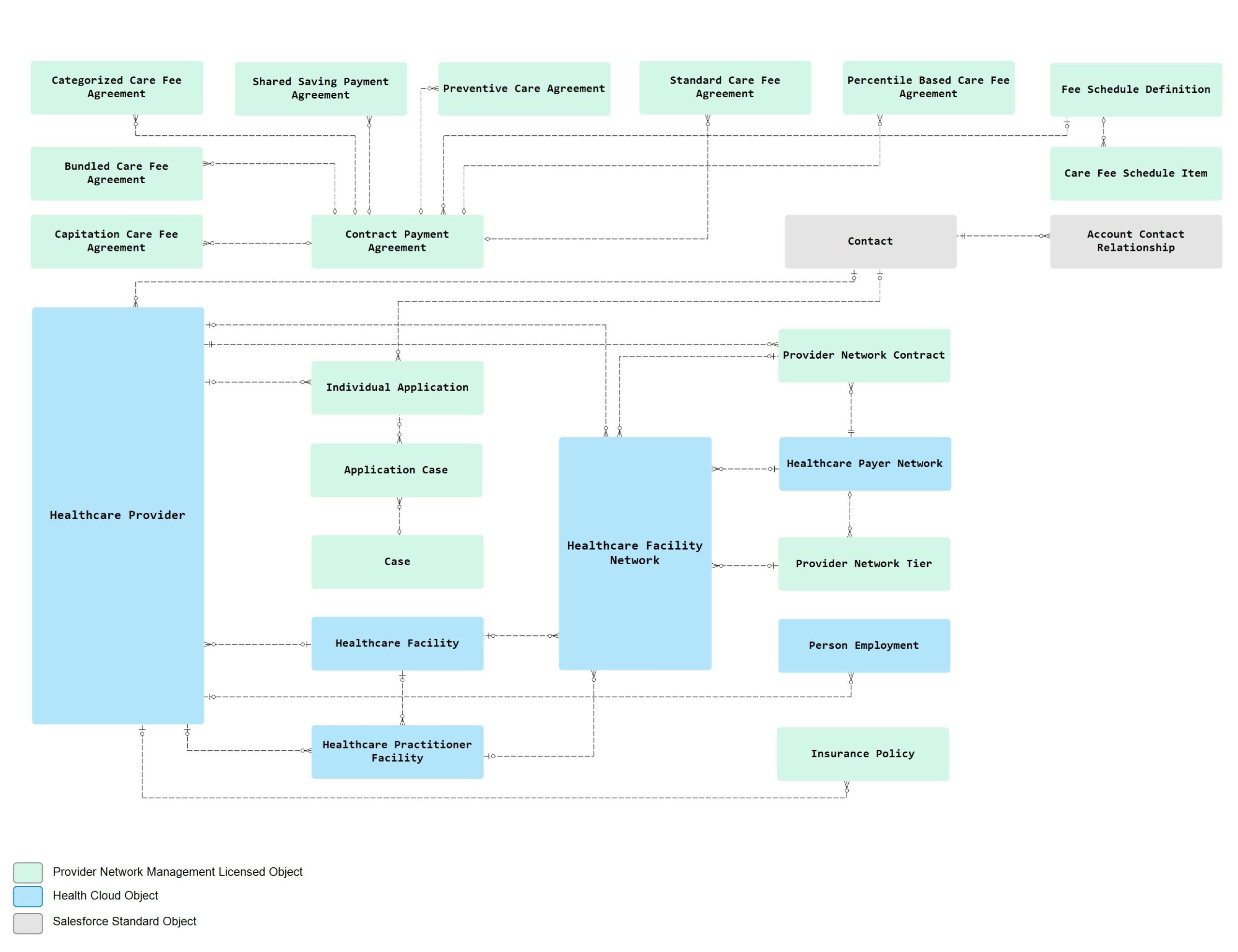 Provider Network Contract Management enables healthcare insurers to manage contracts with providers and provider groups. This model supports the documentation and management of contract terms, payment agreements, and provider network tiers, ensuring that provider networks are well-organized and compliant.
Generating Model Documentation and a Data Dictionary
Effective Salesforce Health Cloud implementations rely on clear documentation and a well-maintained data dictionary. These resources ensure everyone involved understands the system’s structure and functionality, supporting smooth operations, onboarding, and compliance.
With AbstraLinx, you can easily generate:
- Model Documentation: Includes entity diagrams, field descriptions, and process flows, offering a visual and textual overview of your Health Cloud setup. Visit our example of documentation generated with AbstraLinx for Salesforce Health Cloud to see its full potential in action.
- Data Dictionary: Contains comprehensive details about your data, including definitions, relationships, and security measures. See our example of data dictionary for Salesforce Health Cloud.
- Workbook in excel format: Download from here examples for configuration excel workbook.
Explore the capabilities of AbstraLinx and see how it enhances your Salesforce Health Cloud experience. Download the project and start your free trial today!
.

In summary: Salesforce Health Cloud is a powerful tool for healthcare organizations, enabling better patient care and streamlined operations. This blog has highlighted its key features, the importance of user-defined metadata, and the value of well-defined user stories and requirements.
We also explored how AbstraLinx simplifies the creation of model documentation and data dictionaries, making it easier to manage and optimize your Health Cloud environment.
By leveraging these tools and strategies, your organization can fully harness the potential of Salesforce Health Cloud, driving improved outcomes and efficiency in today’s dynamic healthcare landscape.