• ERBuilder
  • Feature Matrix
  • Pricing
  • About us
  • ERBuilder Logo
  • 7.0
  • Getting started

    • About ERBuilder

    • Installation guide

    • User interface

  • Project management

    • Creating a new project

      • - Create a new project

      • - New project from scratch

      • - Automatically from user stories/ requirements

      • - From existing database

    • Opening an existing project

    • Closing a project

    • Saving a project

    • Save as a project

    • Exiting the application

    • Project properties

    • Opening multiple projects

  • Diagram Management

    • Add a new diagram

    • Delete a diagram

    • Rename a diagram

    • Diagram properties

    • Add existing tables/relationships to diagram

    • Show/hide relationships from a diagram

    • Export diagram as an image

    • Print/ Preview a diagram

    • Print setup

  • Objects

    • Tables

      • - Creating a new table

      • - Editing a table

      • - Deleting a table

      • - Duplicating a table

      • - Show/hide related relationships

      • - Table Styles

    • Domains

      • - Creating a new domain

      • - Editing an existing domain

      • - Deleting an existing domain

    • Columns

      • - Creating a new column

      • - Editing an existing column

      • - Deleting an existing column

    • Indexes

      • - Creating a new index

      • - Editing an existing index

      • - Deleting an existing index

    • Constraints

      • - Creating a new constraint

      • - Editing an existing constraint

      • - Deleting an existing constraint

    • Keys

      • - Creating a new key

      • - Editing an existing key

      • - Deleting an existing key

    • Triggers

      • - Creating a new trigger

      • - Editing an existing trigger

      • - Deleting an existing trigger

    • Procedures

      • - Creating a new procedure

      • - Editing an existing procedure

      • - Deleting an existing procedure

    • Views

      • - Creating a new view

      • - Editing an existing view

      • - Deleting an existing view

    • Sequences

      • - Creating a new Sequence

      • - Editing an existing Sequence

      • - Deleting an existing Sequence

    • Relationships

      • - Creating a new relationship

      • - Editing an existing relationship

      • - Deleting an existing relationship

      • - Setting relationship line style

      • - Add/ remove relationship point

      • - Show/hide a relationship

      • - Relationship styles

    • Schemas

      • - Creating a new Schema

      • - Editing an existing Schema

      • - Deleting an existing Schema

    • Requirements/ user stories

      • - Creating a new requirement/ user story

      • - Assign a requirement/ user story

      • - Editing an existing requirement/ user story

      • - Deleting an existing requirement/ story

      • - Import/ export requirements and user stories

    • Custom metadata

      • - Create a new custom metadata

      • - Assign a custom metadata

      • - Edit a custom metadata

      • - Delete a custom metadata

    • Manipulate objects

      • - Undo/Redo an action

      • - Copying/Pasting objects

      • - Reaching objects

      • - Organize and arrange Objects on a diagram

      • - Finding/Replacing objects

      • - Replacing data types

  • Connections management

    • Creating a new connection

    • Editing an existing connection

    • Deleting an existing connection

    • SSL settings

    • SSH settings

      • - SSH Connection using Password authentication

      • - SSH Connection using Public key authentication

    • Windows authentication

  • Forward/Reverse engineering

    • Forward engineering

      • - Model validation

      • - DDL Script generation

      • - Database generation

    • Reverse engineering an existing database

  • Advanced features

    • Update database from model

    • Update model from database

    • Generate change script

    • Compare models and/or databases

    • Merge models

    • Change DBMS

    • Model documentation

      • - Generate data model documentation

      • - Confluence connection settings

      • - Auto generate description

    • Generate data dictionary

    • Using ERBuilder console to generate documentation/ data dictionaries

    • Schedule the generation of data dictionaries/ documentation

    • Generate user interface

    • Generate test data

    • Data Generators settings

      • - Assign Data Generators

      • - Add a new generator template

    • Work with virtual test data in a database sandbox

    • Versions control management

  • Generative AI features

    • Auto-generate ERD using generative AI

    • Update model from Requirements/ User Stories using generative AI

    • Generative AI setup

  • Data model browser

    • About data model browser

    • Elements of the data model browser

    • Using the advanced filters

  • Git version control

    • Setup of Git with ERBuilder

    • Import project from Git repository

    • Save changes to Git repository

    • Refresh model

    • Manage versions

  • Options management

    • General

    • Diagram

    • Tables

    • Relationships

  1. Home
  2. Work with virtual test data in a database sandbox

Work with virtual test data in a database sandbox

Virtual test data are data that are not persistent in a database. These data are stored only in memory and are used to:

  • Validate a data model by manipulating and querying the data in a database sandbox.
  • Generate test data.

Populate the database sandbox

You can fill in the database sandbox with virtual test data manually, or you can populate it automatically using the data generators (see the section “Assign Data Generator settings”).
To populate the virtual test data grid automatically:

  1. Open the “Database sandbox” form by clicking on “Tools | Database sandbox”. On the “Data” tab select the column that you want to fill in with virtual data. You need to set the number of rows that you want to populate in the grid.
  2. Then, click the populate button .

  3. populate the virtual test data grid automatically
  4. You can delete all populated data by clicking the delete button . You can also add, edit, or delete a single row.
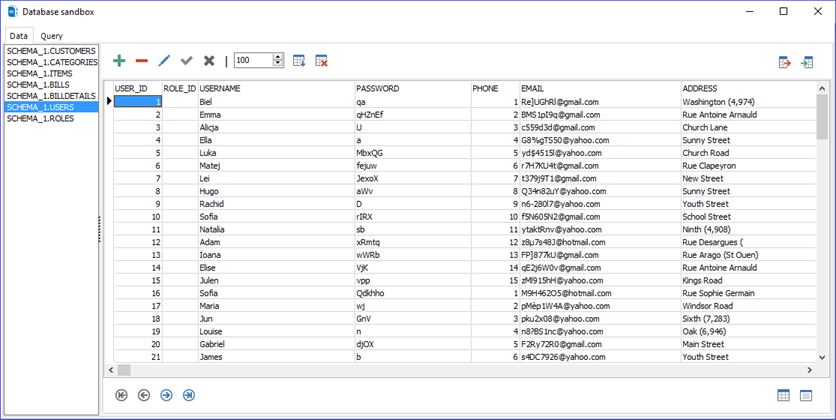
To populate the virtual test data grid manually, use the toolbar buttons to manually fill in the grid. You can also edit or delete an existing row.

Note: If you fill in data manually, be careful when the data type is serial or auto-increment; you need to respect the sequencing rule. If you insert random data, an issue can arise when you generate persistent data from the virtual data to populate your database.

View virtual test data

You can display the data as a grid or as a form. To switch the view, click the Grid View button or the Form View button at the bottom.

Button Description
Add record: Fill in a new record manually.
Delete record: Delete any selected record(s).
Edit record: Edit an existing record.
Apply changes: Apply the changes made to a record.
Discard changes: Cancel all edits made to a record.
Set the number of rows: Set the number of rows that you want to populate in the grid.
Populate the grid: Populate the grid using the data generators.
Clear the grid: Clear all existing data in the grid.
First record: Move to the first record.
Last record: Move to the last record.
Next record: Move to the next record.
Previous record: Move to the previous record.
Grid view: Switch to grid view.
Form view: Switch to form view.
Export to CSV: Export the virtual data generated to a CSV file.
Import from CSV: Import virtual data from a CSV file.

Query virtual test data

You can manipulate virtual test data by using the query tool, accessed by clicking the “Query” tab.
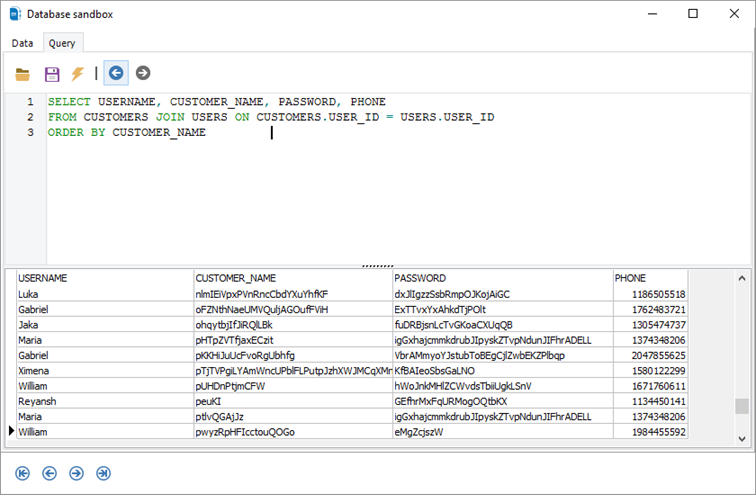
Query virtual test data


Use the toolbar buttons to do the following:

Button Description
Open a saved SQL query
Save an SQL query
Execute an SQL query
Navigate to the previous query
Navigate to the next query
First record: Move to the first record.
Last record: Move to the last record.
Next record: Move to the next record.
Previous record: Move to the previous record.


Available in: Professional and Enterprise Editions

  • ← Previous
  • Next →

Can't find what you're looking for?

Let us help you right now!

Version 7.0
Copyright © 2023 Softbuilder. All rights reserved.